
On a recent visit to Greenland, Larry Swets met a mechanic whose business had given him a reason to stay.
The man had spent four years learning his trade. Swets described watching him repair ATVs “faster than any US mechanic shop,” taking obvious pride in his work. Without that business, the mechanic told him, he would probably have had to return to Denmark.
The mechanic had established his business without Swets’s help. But the encounter stayed with him. Here was someone with the training, ability and determination to build a life in Greenland. Swets began thinking about how many others might do the same with access to capital and the right connections.
During an hour-and-twenty-minute conversation with GreenlandEnergy.com, he returned repeatedly to people like that mechanic.
Swets connected the resourcefulness he saw with Greenland’s Inuit heritage: generations of innovation shaped by the demands of living and surviving in the Arctic. His interest lies in what people with that ingenuity could accomplish with additional tools, financing and opportunities.
That thinking helps explain Greenland Arctic Development Corp., the private company he has established to invest in Greenland’s development.
Swets brings considerable financial experience to the effort. His public biography records more than 25 years in financial services, including leadership and advisory roles in transactions involving OppFi, Hagerty and Saltire Capital. Greenland Energy Company is a more recent example of his involvement in bringing a business to public markets.
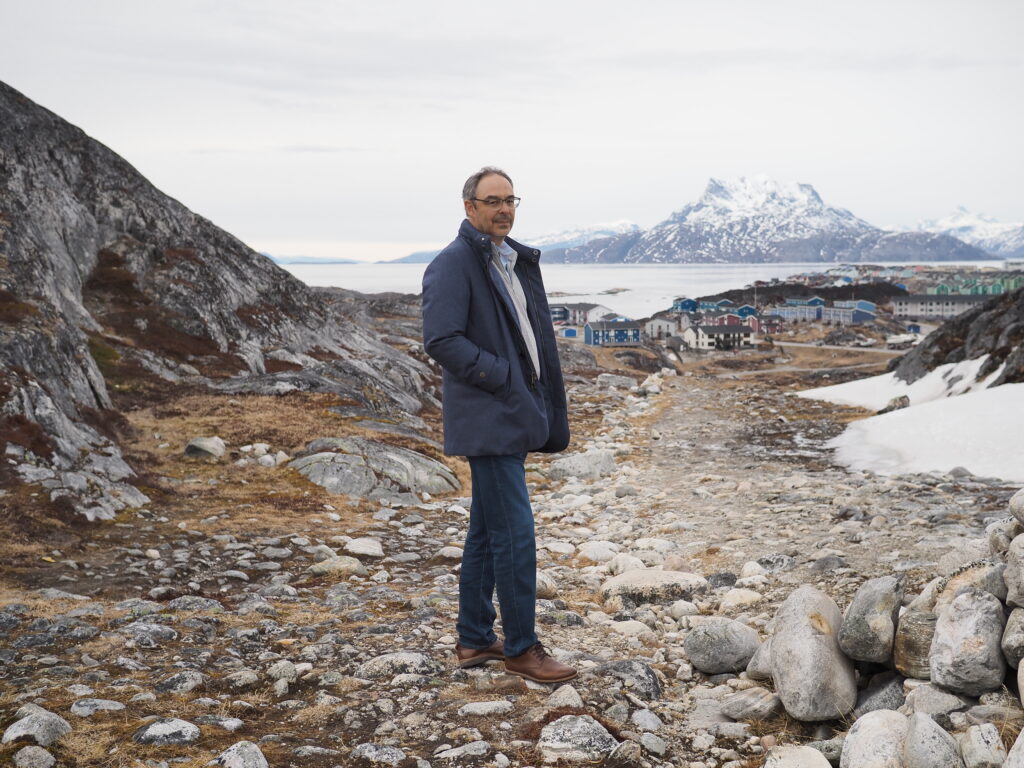
How GADC Took Shape
According to Swets, his interest in Greenland began before his involvement in Greenland Energy Company, when he was exploring the possibility of developing data centers there. His subsequent work on resource development brought him into closer contact with the practical difficulties of moving people, equipment and supplies.
His visits, particularly to Ilulissat and the surrounding region, also introduced him to people who wanted to tackle those difficulties themselves.
He described meeting Greenlanders who had studied in Denmark and returned home with skills and ambitions. In his view, some of the opportunities they identified were within reach if someone could help arrange the financing, equipment or commercial relationships.
GADC grew out of those encounters.
Its ambitions extend across aviation, maritime services, housing, digital infrastructure and tourism. Bloomberg reported in September that Swets aims to raise between $100 million and $200 million by the end of 2027. He has described GADC as a company structured to accommodate the long time horizons involved in Arctic investment.
Yet some of the examples he discussed were much smaller.
Consider five jobs in a community of 300 people. Swets believes an enterprise on that scale could have an immediate effect on families and the surrounding economy. It could provide livelihoods that allow people to remain where they want to live.
Greenland had 56,945 residents at the beginning of July. In a country of that size, he sees an unusual opportunity for an entrepreneur to make a noticeable contribution.
A small domestic market can discourage investors. Swets sees the people within it: skilled residents who want productive work, customers who need dependable services and entrepreneurs who understand needs that an outsider might overlook.
Putting Local Skills to Work
Among the ideas we discussed was local manufacturing using large-scale 3D printing. He is interested in whether suitable parts and products could be made on demand in Greenland, reducing reliance on distant suppliers and lengthy deliveries.
Potential customers could include Greenlandic businesses alongside European and American companies working in the country. He also discussed bringing Greenlanders to the United States for training, then supporting their return with the knowledge to operate businesses at home.
In the partnerships he described, local entrepreneurs would have a meaningful role in ownership and management. Their knowledge would help determine what to produce, which services to offer and where demand exists.
These are commercial ambitions, and their success will depend on businesses earning enough to sustain themselves. The proposed benefit is shared: returns for investors, opportunities for entrepreneurs and useful services for their communities.
What struck me during our conversation was how often Swets returned to individual people. The mechanic. The Greenlanders who had studied abroad and come home. The prospective business owner who might need an introduction or financing to get started.
I came away with the impression that GADC could become a defining part of Larry’s work in Greenland. Over time, its significance may be measured in the businesses people build and the opportunities they create for others.
The mechanic already had a business that allowed him to stay. Swets wants to help more Greenlanders have that choice.
*Disclosure: GADC is a paying advertiser on GreenlandEnergy.com The company had no editorial control over this article.*
GreenlandEnergy.com provides independent analysis of Greenland’s energy landscape, critical minerals development, and Arctic geopolitics. For corrections or feedback: press@greenlandenergy.com
