Denmark is mad. Mad enough to download apps. Two of them, in fact.
In response to President Trump’s renewed push to acquire Greenland, Danish consumers have flocked to boycott apps like “Made O’Meter” and “NonUSA”. Digital tools designed to help them identify and avoid American products on supermarket shelves. Over 100,000 downloads since launch. A viral moment. A statement of sovereignty and solidarity with Greenland.
There’s just one problem: the math doesn’t math.
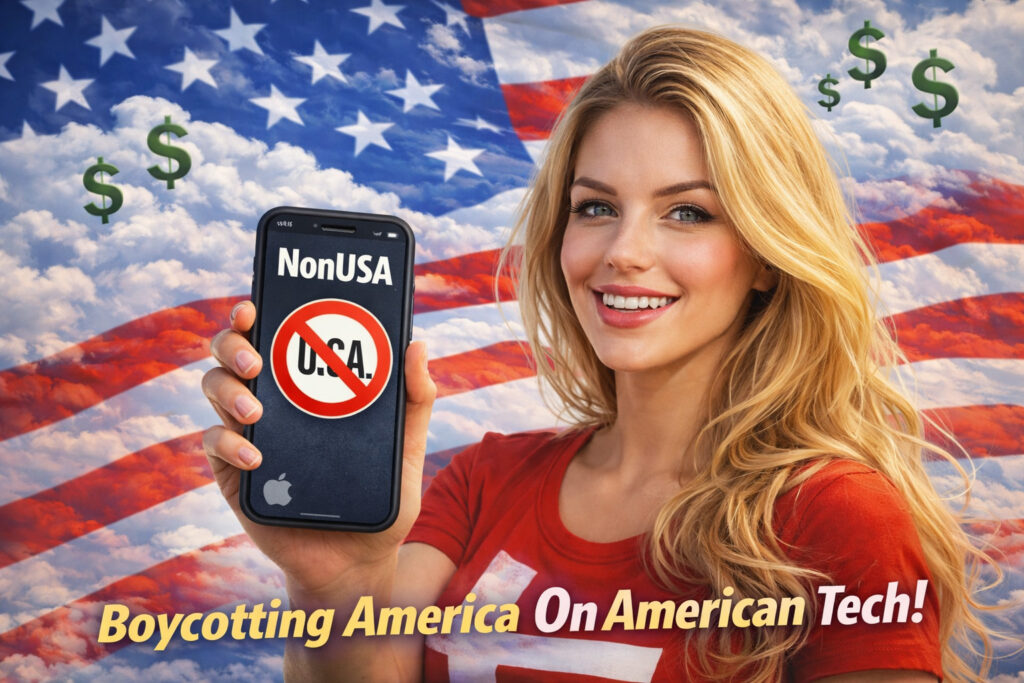
The Almond Paradox
Here’s what Denmark is actually boycotting: American products account for roughly 1-3% of goods in Danish grocery stores. We’re talking nuts, wines, candy. The occasional bag of Doritos. According to behavioral economist Christina Gravert, “There are not that many U.S. products in Danish supermarkets.”
Meanwhile, here’s what Denmark is using to organize this boycott:
- Apple iPhones (American)
- Google Android phones (American)
- Apple App Store (American)
- Google Play Store (American)
- Microsoft Office tools (American)
- Cloud infrastructure hosting the apps (likely AWS, Azure, or Google Cloud. All American)
- Analytics SDKs embedded in the apps (probably American)
- The internet routing protocols moving all that data (overwhelmingly American designed)
Boycott Ledger
- American products avoided: Cashews (maybe)
- American software used: Yes
- American cloud infrastructure used: Yes
- American companies paid per interaction: Yes
- Feeling of moral satisfaction: High
- Actual leverage: Low
Denmark has effectively doubled its consumption of American digital products to reduce its consumption of American physical products.

The Cloud Has the Last Laugh
Every time a concerned Danish shopper opens “NonUSA” to scan a barcode, here’s what happens:
- Their American designed phone
- Runs American operating system code
- Connects through American cloud infrastructure
- To check if their cashews are American
The cashews might be from California. The entire digital supply chain definitely is.
Apple and Google are getting a fraction of a cent per download and ongoing app usage. Planters Peanuts is completely unaffected.
Ah, But It Feels Good
Look, we get it. The apps aren’t really about moving economic needles. Even their creators acknowledge this. Developer Ian Rosenfeldt admits such boycotts won’t damage the U.S. economy but hopes to “send a message.”
And they do send a message just not the one intended.
The message is this: When geopolitical tensions meet consumer action, the gesture often matters more than the math.
This matters for Greenland because the same dynamic plays out in the critical minerals space. Politicians make bold statements about supply chain independence and strategic autonomy. Headlines scream about rare earth races and Arctic sovereignty. Apps go viral. Everyone feels like they’re doing something.
Then you look at the actual infrastructure required to develop Greenland’s resources:
- Mining equipment (largely American, European, or Chinese)
- Financing (US dominated banking system)
- Technology (satellite comms, AI for mineral exploration—heavily American)
- Processing capacity for rare earths (overwhelmingly Chinese)
- Digital systems managing the entire supply chain (American cloud platforms)
The Serious Point Underneath
Denmark’s boycott apps are civic catharsis dressed up as economic action. They make people feel empowered without requiring real sacrifice. Deleting Candy Crush is easy. Switching from iPhone to what, exactly? That’s hard.
Real strategic change in Greenland developing critical minerals, building processing capacity, creating genuine alternatives to Chinese rare earth dominance requires sustained policy, patient capital, and infrastructure investment measured in decades, not viral moments measured in download counts.
Tanbreez needs power infrastructure, port facilities, and processing plants. Kvanefjeld needs regulatory clarity and political will. Dalaroo’s Blue Lagoon needs systematic drilling, metallurgical testing, and years of development.
None of that happens because 100,000 people downloaded an app during a news cycle.
The Verdict
Denmark’s boycott apps will see declining usage within weeks. Grocery store shelves won’t change. US tech dominance in Denmark will remain untouched. And the next time a Danish consumer needs to upgrade their phone, they’ll be choosing between Apple and Samsung (Korean phones running American software).
The apps are meaningful as a sentiment indicator they show real frustration with Trump’s Greenland rhetoric. But as an economic lever? They’re about as effective as bringing a barcode scanner to a geopolitical gunfight.
Score:
- American products successfully avoided: A few bags of almonds
- American digital infrastructure enriched in the process: All of it
- Irony level: Peak
Bottom line: If Denmark wants to send a message about Greenland’s future, the message won’t be delivered through grocery store aisles. It’ll be delivered through investments in Greenland’s actual development, regulatory frameworks that enable responsible mining, and infrastructure that creates alternatives to the systems everyone including boycott app users currently depends on.
Until then, there’s an app for that. Downloaded from an American company. Running on American infrastructure. Checking if your peanuts are American.
The cloud doesn’t take sides. It takes transactions.
Greenland Energy provides independent analysis of Greenland’s energy landscape, critical minerals development, and Arctic geopolitics. For corrections or feedback: press@greenlandenergy.com
