
KNR’s report on Greenland Airports’ 2025 accounts puts a hard number on the pressure facing the company. A reported loss of 2.7 billion kroner is not a small figure, even if the largest part of that number comes from a write down of airport values rather than day to day operating losses.
Naalakkersuisut’s response was a public signal that confidence is under pressure. Public infrastructure companies have public responsibilities. When the public is carrying the risk, citizens deserve clear explanations.
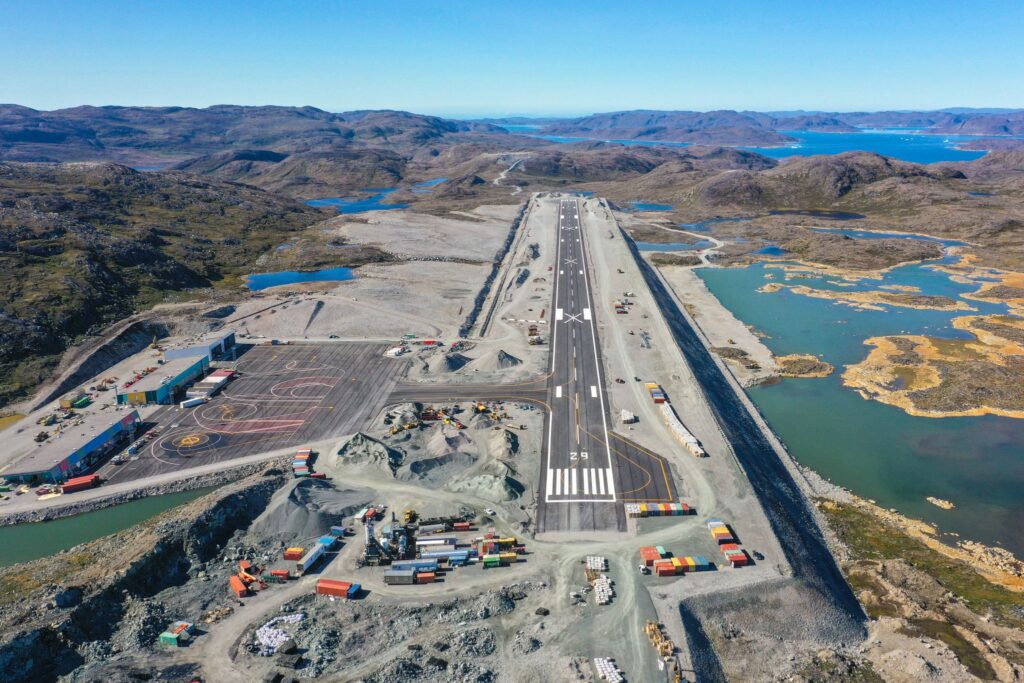
Greenland’s new airports are neither waste nor vanity projects. They are national gateway infrastructure. Nuuk Airport has already changed how Greenland connects to the outside world. Ilulissat will do the same for one of the country’s most important tourism regions. Qaqortoq is also part of a larger national shift toward more direct access, more regional opportunity and less dependence on old travel patterns.
Airports are infrastructure before they are businesses
Speaking to KNR after the general meeting, Jens W. Willumsen, chairman of Greenland Airports, made the central point clearly: the airports should be seen as a major infrastructure investment, not as a short term business.
However, poor execution still matters. Long security lines, higher operating costs and weak public communication cannot be brushed aside.
Long security lines at a small airport may look absurd from the outside, but they reveal the same problem as the accounts: Greenland has built new gateway infrastructure faster than the staffing, systems and operating assumptions around it have fully matured.
This has to change quickly. When a country opens new international gateways and the eyes of the world are watching, the goal cannot be merely to get by. Greenland needs a system of excellence: efficient security, clear communication, reliable staffing, professional passenger flow and airport operations that match the ambition behind the investment.
The world has seen this before
The United States has examples. Denver International Airport was heavily criticized after opening, especially because of its troubled baggage system and high cost. Today, Denver is one of the busiest airports in the world. The early criticism was not imaginary, but neither was the long term value.
Europe has even sharper lessons. Berlin Brandenburg Airport became an international symbol of delay, cost overruns and project failure before it finally opened. Yet Berlin still needed a modern capital airport. The scandal was real. So was the infrastructure need.
Spain shows the danger on the other side. Ciudad Real became a warning about building an airport without enough real demand behind it. It was not enough to pour concrete and hope airlines would come. Airports need passengers, routes, hotels, workers, cargo, companies and a wider economy ready to use the access.
Greenland is building access where access has long been the limit
Greenland is different from many failed or troubled airport projects elsewhere. It is not simply adding extra capacity to a mature, saturated market. It is building first generation gateway infrastructure for a country where access itself has long been one of the main limits on growth.
That makes the “if you build it, they will come” argument more credible in Greenland than it would be in many other places. Better airports can make tourism easier, business travel more realistic, international investment more practical and remote communities more connected. They can also support mining, energy, construction, government services and cultural exchange.
If Greenland builds airports but does not move serious projects forward, the financial pressure will grow. If permitting remains slow, if private enterprise is not encouraged, if hotel capacity does not expand, if skilled labor is not trained, if energy projects do not advance and if international investors cannot see a clear path from interest to execution, then the airports will carry too much of the burden alone.
That is why the Greenland Airports result should not be read only as a criticism of Greenland Airports. It should be read as a warning to the wider system.
The port moves bulk, the airport moves time
As GreenlandEnergy.com argued in its earlier analysis of Qaqortoq Airport and Tanbreez, the port moves bulk, but the airport moves time. Across Greenland’s project economy, airports do not replace ports. They shorten the distance between a problem and the people needed to solve it.
Qaqortoq Airport also changes the practical conditions around major projects by making site visits, investor travel, contractor movement, inspections, management access and urgent logistics more realistic.
The economy now has to catch up
Tourism needs rooms, guides, transport and service capacity. Mining needs predictable permitting, local benefit agreements, ports, power and a serious workforce plan. Energy projects need decisions, timelines and offtake. Construction needs materials, equipment and skilled trades. Communities need to see that new infrastructure is not only for outside visitors, but also for local opportunity.
This is where political leadership becomes important. Criticism after a bad financial result is easy. The harder work is creating the conditions that allow the airports to succeed.
Big infrastructure needs big follow through
Greenland has now made that bet. The airports are there. They are modern, ambitious and strategically important. They make Greenland easier to reach and easier to take seriously as a place for tourism, business, investment and international cooperation.
If Greenland uses these airports as the foundation for private enterprise, regional growth, responsible resource development and better community connection, the current financial pain may eventually look like the difficult early stage of a necessary national investment.
Greenland does not need to apologize for building big. It needs to make sure the big projects around the airports move forward.
GreenlandEnergy.com provides independent analysis of Greenland’s energy landscape, critical minerals development, and Arctic geopolitics. For corrections or feedback: press@greenlandenergy.com
READ NEXT: Qaqortoq Airport Is More Than a Travel Upgrade. For Tanbreez, It Is Logistics Insurance.

