
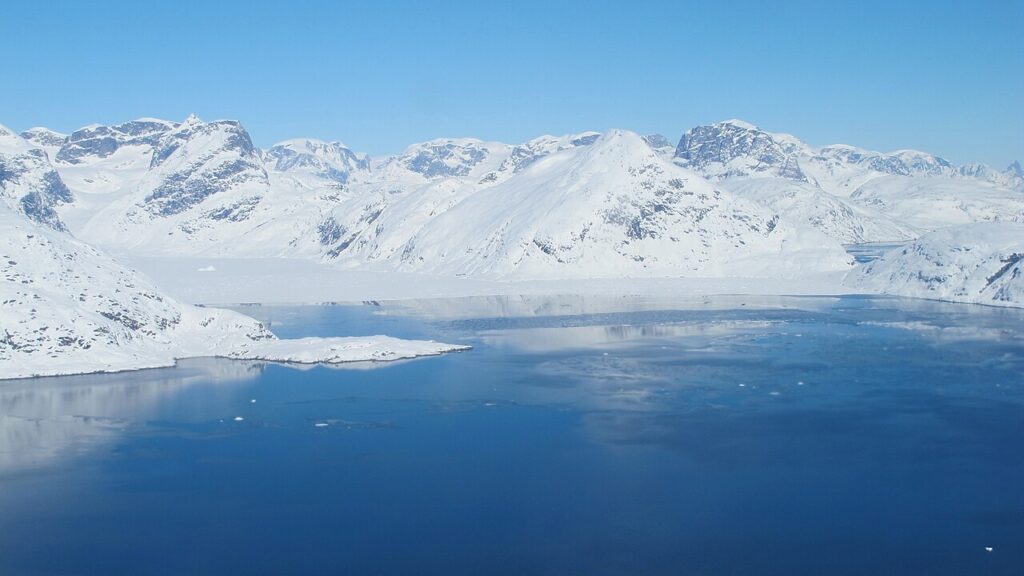
Greenland’s clean waters are not simply a beautiful backdrop. They are part of the country’s national wealth.
They support fisheries, seafood exports, local communities, and a tourism industry built around the opportunity to experience an Arctic environment that remains remarkably unspoiled.
That is why a proposal due to be considered by Inatsisartut on Tuesday deserves attention.
Sermitsiaq journalist Trine Juncher Jørgensen reported Friday that Justus Hansen of Demokraatit has introduced a proposal calling for a ban on the discharge of scrubber wastewater from ships in Greenland’s territorial waters.
The proposal would require Naalakkersuisut to introduce the necessary restrictions no later than January 1, 2027.
The first reading is scheduled for June 9, with further consideration expected during the autumn session.
Moving pollution from the air into the sea
Scrubber systems are used by ships burning heavy bunker oil. The systems wash pollutants from exhaust gases with water, reducing certain forms of air pollution.
With open scrubber systems, the wastewater can be released into the sea. Instead of eliminating the pollution, the process can move part of the problem from the air into the marine environment.
Scrubber wastewater can contain heavy metals and tar related substances that accumulate in marine ecosystems and enter the food chain. In a country where fisheries and seafood exports remain central to the economy, that should not be treated as a minor side issue.
It is difficult to justify using cleaner technology in one part of a ship while treating the ocean as the disposal system for the resulting waste.
Royal Arctic Line has already taken the lead
Royal Arctic Line has already phased out heavy bunker oil and scrubber systems on the vessels in its fleet that were still using them. The company made the change voluntarily, despite acknowledging that the cleaner Marine Gas Oil alternative costs more.
Royal Arctic Line understood that there was a contradiction in transporting seafood from some of the cleanest waters in the world while continuing to use fuel systems that could discharge harmful substances back into those same waters.
The company took the lead before it was forced to do so.
Greenland now has an opportunity to turn that example into a wider standard.
A memory from Ullapool
I grew up in the Highlands of Scotland and remember watching old Soviet fishing vessels patrolling the waters and docking at Ullapool on Loch Broom. What stayed with me was the smell and the slicks left on the water when fishing boats and tour vessels came into port.
I was around 12 years old. I did not understand the technical details, but instinct told me that it could not be good for marine life.
The economic value of clean waters
Coastal communities live with a difficult reality.
Cleaner fuels, stronger containment standards, and stricter environmental rules can increase operating costs. Nobody should pretend that the transition is entirely free. Royal Arctic Line itself acknowledged when it moved away from heavy bunker oil that the price difference would ultimately be borne by the company and its customers.
For this specific proposal, however, the anticipated impact appears limited. The proposal says the ban would primarily affect a small number of foreign shipping operators. It estimates approximately DKK 225,000 in additional annual costs for shipping between Nuuk and Reykjavík and anticipates no significant consequences for residents.
Even limited costs matter in remote communities where household budgets are already stretched. But there is another economic risk that is harder to measure until the damage has been done: the loss of a reputation for purity.
The debate over the proposed Kuannersuit rare earths project in South Greenland offers a useful analogy. Sheep farmers worried not only about the possibility of contamination, but also about the effect that even a perception of tainted lamb could have on their livelihoods. Once customers begin to question the purity of a food product, the commercial damage can spread far beyond the original source of concern.
The same principle applies to Greenland’s waters.
Greenland’s seafood exports and tourism appeal are built partly on an image of extraordinary cleanliness. Pollution does not have to destroy an entire ecosystem before it begins to carry an economic cost. A visible slick, a troubling headline, or a growing perception that standards are too lax can be enough to undermine confidence.
The choice is not between a free option and an expensive one. It is between paying the cost of responsible shipping now or risking a much larger environmental and reputational bill later.
Containment is already expected elsewhere
There is nothing radical about expecting companies to prevent contamination in sensitive environments.
In the construction industry, specialized excavators working near protected marine areas and wildlife habitats are expected to use containment measures to reduce the risk of fuel or hydraulic fluid spills.
When the surrounding environment is unusually valuable or unusually vulnerable, operators are expected to take additional precautions.
Shipping should not be held to a lower standard.
Cleaner fuels should be used where possible. Where wastewater or other potentially harmful substances remain, full containment should be the priority.
We live in modern times. There is no good reason for ships to rely on outdated practices when cleaner fuels, better containment systems, and better technologies are available.
Set the standard before activity increases
Greenland is entering a period of increased international interest. Tourism, shipping, infrastructure investment, and resource development all offer opportunities. But each also brings decisions about what standards Greenland expects companies to meet.
Those standards should be established early.
If foreign companies want to participate in Greenland’s development, they should be prepared to pay the real cost of operating responsibly in Greenland.
That is not anti business. It is a basic condition of responsible development.
Greenland’s clean waters are its national park. They are one of the country’s greatest economic assets and one of its greatest attractions to visitors.
They should be protected accordingly.
GreenlandEnergy.com provides independent analysis of Greenland’s energy landscape, critical minerals development, and Arctic geopolitics. For corrections or feedback: press@greenlandenergy.com
READ NEXT: Arctic Economic Council: Greenland Investment Will Move at the Speed of Trust
