
Julia Nesheiwat’s appearance before the Senate Foreign Relations Committee on September 17 offered a clear picture of the work awaiting the next U.S. Ambassador-at-Large for the Arctic: strengthening alliances, improving access to the High North, and connecting national security with energy, critical minerals, and infrastructure.
Before turning to policy, Nesheiwat became briefly emotional while recalling her parents, Ben and Hayat Nesheiwat, first-generation Jordanian Christian immigrants who raised five children in rural Florida on faith, education, and service.
“My widowed mother, a nurse, held our family together,” she said. “She taught us that America does not owe anyone an easy path, but rewards grit, dedication, and a willingness to serve.” Her own career, from Army deployments in Afghanistan and Iraq to senior roles in diplomacy and national security, reflects those values.
Committee Chairman Jim Risch opened his questions by observing that Arctic issues receive considerable attention in intelligence discussions but comparatively little media coverage. Nesheiwat’s testimony illustrated why the region deserves broader public attention.
In her answers, Nesheiwat pointed to growing Russian and Chinese activity, shortages in America’s icebreaker fleet, and gaps in Arctic surveillance and infrastructure. She emphasized closer cooperation with allies and stronger Coast Guard and Navy capabilities to support an effective American presence in the High North.
Senator Jeanne Shaheen raised concerns heard during a visit to Greenland and other Arctic destinations about the administration’s approach to traditional partners. Nesheiwat emphasized cooperation and suggested regular coordination with U.S. ambassadors in the region. She also discussed the importance of Japan and South Korea, including possible trilateral Arctic discussions with the United States.
Five days after the hearing, the United States, Greenland, and Denmark signed an agreement providing for additional U.S. defense areas at Mestersvig and Narsarsuaq, subject to parliamentary procedures and agreed implementation arrangements. Mestersvig’s military future could bring significant changes to East Greenland, making sustained cooperation with Greenlandic and Danish authorities especially important. Mestersvig lies north of Jameson Land, where Greenland Energy Company is pursuing oil exploration.
If confirmed, Nesheiwat could enter office as those plans take shape. Helping maintain allied trust and connect Arctic security priorities with infrastructure needs and Greenlandic interests would offer an early opportunity to put her experience to work and establish relationships that future Arctic ambassadors could build upon.
From Military Service to Arctic Diplomacy
Her proposed role draws on a career spanning military service, intelligence, diplomacy, energy, and resilience. A former Army military intelligence officer, Nesheiwat deployed in support of operations in Afghanistan and Iraq before serving in the Office of the Director of National Intelligence during its early years. Her government service has spanned the George W. Bush, Obama, and Trump administrations.
At the State Department, she held the position of deputy assistant secretary for Energy Resources and later served as deputy and acting special presidential envoy for Hostage Affairs. Those responsibilities brought experience in international energy policy, negotiations, and coordination across government.
In her opening remarks, she also acknowledged former hostage Xiyue Wang and his wife, Hua, who were attending the hearing. Wang was freed from Iran after three years in captivity.
In 2019, she became Florida’s first chief resilience officer, addressing preparedness and the effects of rising seas and natural disasters. In 2020, she became President Trump’s homeland security adviser.
She told senators that her White House responsibilities included Arctic strategy and chairing National Security Council discussions about the icebreaker shortage. Her Arctic experience also includes service on the U.S. Arctic Research Commission.
Closing America’s Icebreaker Gap
In January 2022, Nesheiwat and Andro Mathewson coauthored a Military Times commentary, “Securing the north: Expanding the United States’ icebreaker fleet.”
They argued for faster fleet expansion and adequate funding, examining purchases, leasing, and new construction as ways to improve American access. Their case extended beyond military operations to supplying remote facilities, supporting research, and protecting economic interests.
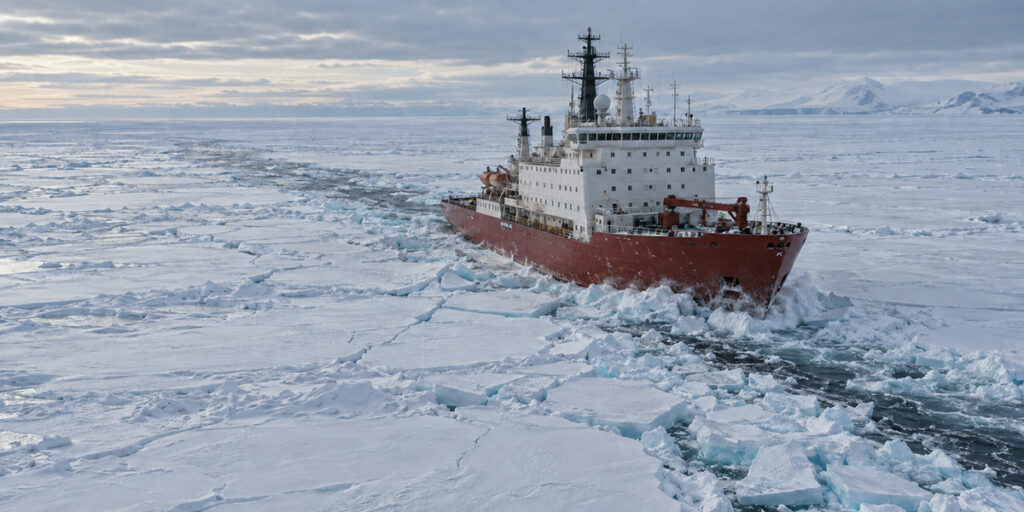
America’s only active heavy polar icebreaker is half a century old. Commissioned in 1976, the conventionally powered USCGC Polar Star also supports annual resupply operations in Antarctica. The Coast Guard operates the medium polar icebreakers Healy and Storis. Russia’s nuclear icebreaker fleet alone numbers eight vessels, according to its operator Atomflot.
New American cutters are being procured, but reliance on a single aging heavy icebreaker leaves little margin for breakdowns or competing missions. For a country asserting a larger Arctic role, that is a serious strategic vulnerability.
At the September hearing, Nesheiwat repeatedly emphasized the need for greater icebreaking capacity and cooperation with Finland and Canada. Together with her earlier advocacy, those exchanges show that closing the gap has been a sustained priority in her Arctic policy work.
More recently, her February 25, 2026 Atlantic Council article, “Why the Arctic matters to the United States,” placed Greenland prominently within the wider picture. She examined its mineral resources, strategic location, and contribution to surveillance and defense, while warning about deepening Russian-Chinese cooperation. She also emphasized diplomacy, allied cooperation, and the Arctic’s Indigenous communities and fragile ecosystems.
Laying the Groundwork for Future Arctic Ambassadors
Nesheiwat would also have an opportunity to shape how the newly legislated role operates. Senator Bill Hagerty highlighted the organizational challenge, asking how her position would fit within the State Department’s complicated structure and secure support across its many areas of responsibility. Nesheiwat pointed to her previous service in the department and her understanding of its regional and functional bureaus, experience that could help her turn a broad diplomatic mandate into coordinated work.
Building on the earlier Arctic ambassadorship held by Michael Sfraga, she could help establish working relationships across government, regular consultations with allies, and practical arrangements for monitoring developments throughout the region. Those foundations could serve successive ambassadors and administrations, giving her work significance beyond her own time in office.
The time available to turn those priorities into sustained work is limited. Confirmation this fall would leave a little over two years before the next presidential term begins on January 20, 2029. Ambassadors-at-large serve at the president’s pleasure, and a successor could retain or replace her.
America’s Arctic ambitions require ships, infrastructure, and sustained cooperation with allies. Nesheiwat brings experience in security, energy, and diplomacy, along with years of attention to the region’s shortcomings. The Senate should confirm her and give her the opportunity to get to work, building the partnerships and practical foundations that future Arctic ambassadors can carry forward.
GreenlandEnergy.com provides independent analysis of Greenland’s energy landscape, critical minerals development, and Arctic geopolitics. For corrections or feedback: press@greenlandenergy.com
