An unusually warm July in East Greenland has added another consideration to the operational planning surrounding Greenland Energy Co and 80 Mile’s proposed exploration program at Nunap Qeqqa, the official Greenlandic name for Jameson Land: the practical value of employing local hunters as wildlife monitors and polar bear safety specialists.
Quality controlled observations available through the Danish Meteorological Institute’s Climate Data API show that Ittoqqortoormiit recorded an average temperature of 8.5°C during July.
That was 2.5°C above the town’s official July average of 6°C for the 1991–2020 climate reference period, according to DMI’s climate normals for Greenland.
The July readings offer a snapshot that raises questions about how changing conditions could affect remote work and wildlife safety planning.
A peer reviewed study published in Frontiers in Marine Science provides important context.
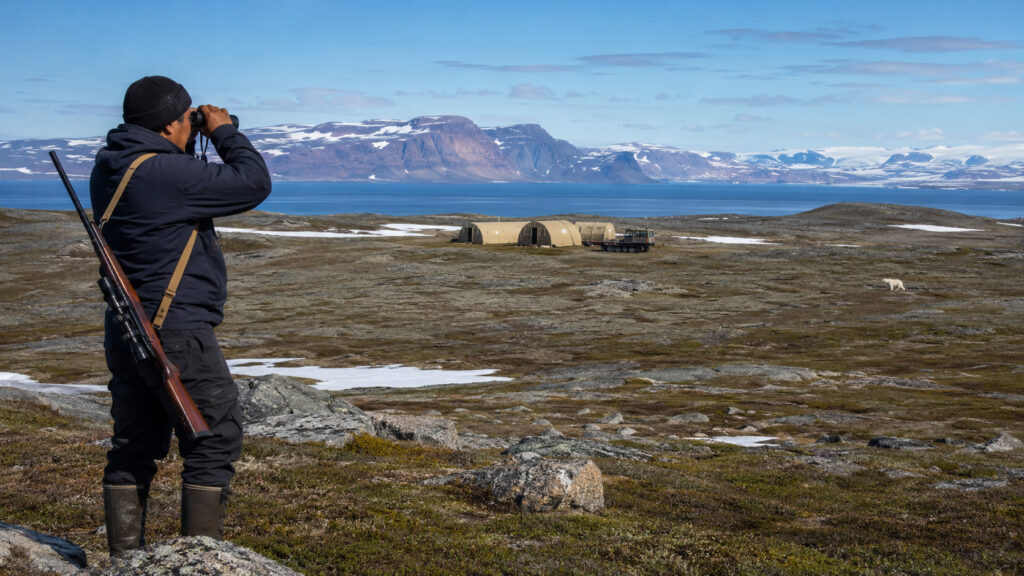
The study was based partly on interviews conducted with nine full time hunters from Ittoqqortoormiit between 2014 and 2015. The hunters described changes in sea ice, hunting routes and polar bear movements compared with conditions approximately 10 to 15 years earlier.
All nine said they had observed changes in sea ice conditions. Hunters who provided more detailed answers described less ice, more open water and later ice formation.
The study also found that 78 percent of the Ittoqqortoormiit hunters believed more polar bears were approaching the settlement than 10 to 15 years earlier. Hunters reported bears close to town during nearly every month, with the two strongest peaks occurring in January and July.
Some hunters connected the increased presence of bears on land with reduced sea ice, although the study also recorded other possible explanations, including changes to hunting quotas and polar bear abundance. The researchers cautioned that the reasons could involve a combination of factors.
The interviews nevertheless illustrate why local knowledge could carry direct operational value for Greenland Energy Co and 80 Mile.
The partners are now targeting winter 2027 for the permitting of their Jameson Land exploration program. Greenland Energy Co said on August 11 that the additional review period would be used to strengthen project planning, optimize logistics and infrastructure requirements, and deepen relationships with local communities.
One practical expression of that commitment could be the employment of experienced Ittoqqortoormiit hunters as trained wildlife monitors.
Their role could extend well beyond carrying a rifle. Local hunters possess experience in recognizing tracks, interpreting animal behavior, reading rapidly changing weather and ice conditions, and identifying areas where encounters may be more likely.
A properly structured program could include camp watches, early warning systems, management of food and waste attractants, route planning and nonlethal deterrence. Armed intervention would remain a last resort governed by Greenlandic law and project safety procedures.
Neither Greenland Energy Co nor 80 Mile has publicly described whether local hunters will be incorporated into the project’s wildlife safety plans.
The warm July reinforces the need for operating plans grounded in current conditions, including an up-to-date assessment of polar bear risk, rather than assumptions carried forward from exploration work conducted decades ago.
For Greenland Energy Co, employing local hunters could combine worker safety, wildlife protection and meaningful local employment.
In one of the world’s most challenging operating environments, the people who understand the land, ice and wildlife best may also become some of the project’s most valuable safety contractors.
GreenlandEnergy.com provides independent analysis of Greenland’s energy landscape, critical minerals development, and Arctic geopolitics. For corrections or feedback: press@greenlandenergy.com
READ NEXT: Qaqortoq Airport Is Open, but Nearby Business Development May Wait Until 2027